Gene therapy allows teen to see snowflakes for the first time

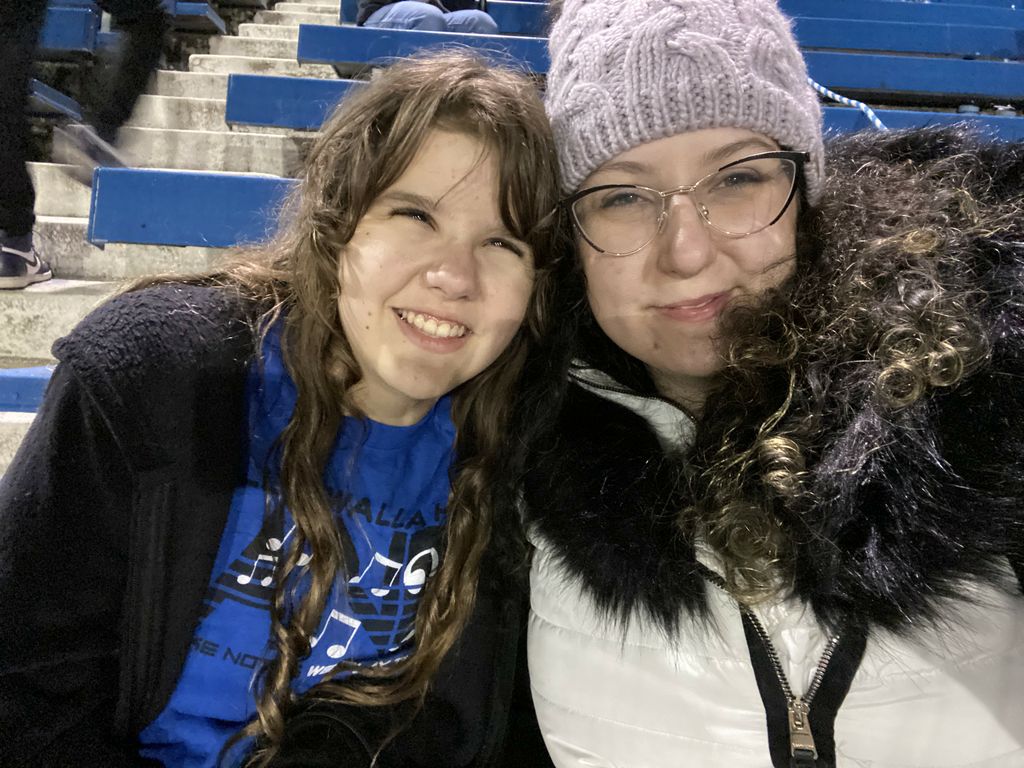
An otherwise ordinary snowfall offered a joyful — and perhaps miraculous — moment for a mother and her teenage daughter this winter.
Eliza Van De Rostyne walked toward the family car as she went out to run ordinary errands in late January with her two children. While standing in the driveway of their Walla Walla, Washington, home, her 16-year-old daughter, Aiden Moore-Van De Rostyne, suddenly shared that she could see snowflakes.
For most, seeing snow is a normal winter occurrence. But for Aiden — who has a gene mutation that has significantly impaired her vision since birth — this was a first. Caught by surprise, Eliza quickly grabbed her smartphone and asked Aiden to repeat herself, but this time on camera.
“Big snowflakes,” Aiden says in the brief, candid video, as she reaches out for large fluffs of snow, her younger brother popping in and out of the background.
Aiden, who has also been diagnosed with developmental delay, doesn’t speak in long sentences. But the video shows her wearing a wide grin that clearly communicates excitement.
“That’s so cool, Aiden,” an enthusiastic Eliza can be heard replying in between giggles.
Experimental treatment
The moment was the result of Aiden’s participation in a clinical trial at Oregon Health & Science University. One of Aiden’s eyes received an experimental gene therapy treatment in April 2022 through a study that is sponsored by Atsena Therapeutics. The experimental treatment sends tiny, molecular machinery to the retina in the back of the eye, where the therapy is designed to deliver a working form of a gene that’s critical for vision.
Mutations in at least 20 genes are known to cause Leber congenital amaurosis, or LCA, a rare condition that causes about one out of 50,000 babies to either be born legally blind or lose most of their vision as children. In Aiden’s case, a GUCY2D gene mutation caused her to be born with this condition. Atsena’s ATSN-101 gene therapy delivers working copies of the GUYCY2D gene.
Aiden is among 15 people in the United States who are participating in the Phase I/II trial, an early clinical study that is evaluating the experimental treatment’s safety and efficacy. Early results released in October 2022 indicate participants like Aiden, who received the highest gene therapy dose, have experienced “meaningful improvements in vision” without any serious safety events related to the gene therapy.

“Aiden being able to see a snowflake for the first time offers a wonderful, real-life account of gene therapy’s potential benefits,” said Paul Yang, M.D., Ph.D., an associate professor of ophthalmology in the OHSU School of Medicine who leads the university’s involvement in the trial through the OHSU Casey Eye Institute and its OHSU Elks Children's Eye Clinic. “As a physician-scientist who works to develop and bring new treatments to patients, it’s an honor to be among the first who get to witness signs of clinical success like this.”
‘I’m going to be brave’
Having been diagnosed with LCA at just 6 months old, Aiden and her family have long adapted to living in a world that largely depends on sight. She uses a cane and her limited vision to get around. A paraeducator accompanies her at school and translates worksheets into braille.
In late 2017, the Food and Drug Administration approved the first-ever gene therapy for an inherited disease — LCA. Unfortunately, that therapy isn’t an option for Aiden because it treats a different form of her condition, which is caused by another gene. But Aiden and her family held out hope — and then learned last year about Atsena’s trial through her OHSU Casey Eye Institute health care team.
“We’re a family that really respects the scientific process,” said her mother, Eliza. “Aiden thinks it’s cool to participate in something like this. When she had the chance to participate in this trial, Aiden said, ‘I’m going to be brave and do something that will help other people.’ Now she says she’s a superhero, like The Incredibles movie characters she loves.”
Before the trial, Aiden could only identify the largest letter on the chart that patients read during eye exams. To identify a shape or letter on paper, Aiden would touch her nose to the sheet, leaving about a half-inch of space between the paper and her eyes. She could differentiate between light and dark, but very bright light or sunshine were overwhelming and prevented her from seeing anything.
After receiving the experimental treatment in one eye, Aiden said she could see more of her mom’s face. And her paraeducator noticed that Aiden was bumping into fewer obstacles at school. While Aiden didn’t describe these changes in detail, various tests for the trial show Aiden’s vision has improved, including being able to read more letters on the eye chart.
“As a mom, I worry about my daughter’s safety,” Eliza said. “Already, the sight she’s gained helps her be more safe and be more independent. That’s so important and very comforting.”
OHSU, Atsena and the trial’s other site, the University of Pennsylvania, will continue to follow Aiden and the other trial participants for four more years to monitor both their vision and overall health.
More trial results are expected to be shared later this month at the Association for Research in Vision & Ophthalmology’s 2023 meeting.