OHSU neuroscientist earns award to advance schizophrenia research

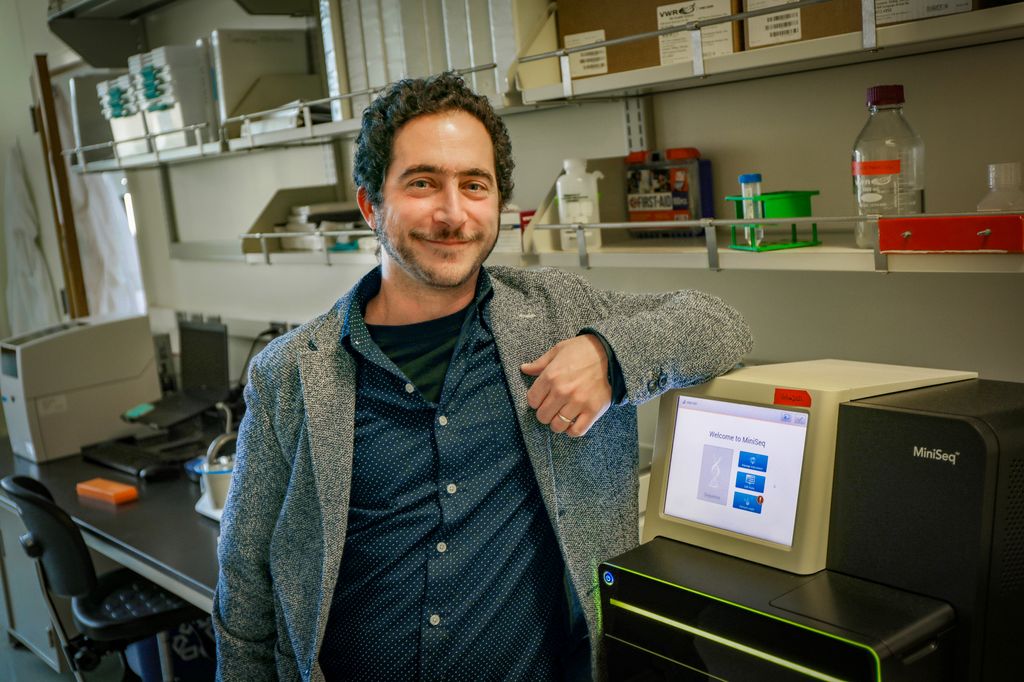
An Oregon Health & Science University neuroscientist has earned a $300,000 research grant over three years to advance his basic science research, seeking to better understand the neural circuits in the brain involved in serious forms of mental illness.
Arpiar “Arpy” Saunders, Ph.D., assistant scientist in OHSU’s Vollum Institute, is one of three researchers nationwide named as Rising Stars by One Mind, a nonprofit organization focused on neuropsychiatric brain research.
Saunders received the 2023 One Mind-Ben Langford and Nicholas Hall Rising Star Award and presented his research at a symposium on Saturday, Sept. 9, during the 29th annual One Mind Music Festival for Brain Health in Rutherford, California. Saunders said the gathering included an impressive community of mental health researchers, advocates and people with lived experience with schizophrenia.
He anticipates it will help to hone his basic science research in Portland.
“Having access to a community with bona fide academic, clinical and lived experience helps us make basic research decisions that are impactful in discovering the currently unknown cellular etiology of schizophrenia,” Saunders said.
Saunders, who joined the Vollum in 2020, will use his award to analyze synaptic rewiring driven by mutations in schizophrenia-associated ion channel genes.
As described in One Mind’s announcement:
“Brain function is enabled by synaptic connections, and genetic studies implicate synaptic proteins in serious mental illness. Yet how mutant synaptic proteins affect brain wiring is largely unknown. By developing viral genomic technologies that describe neural circuits at scale, Saunders aims to understand how schizophrenia-associated mutations in glutamate receptors alter neural wiring throughout the brain. In discovering the relationship between gene-specific mutations and neural miswiring, Saunders will help open the door for personalized therapeutics.”
Saunders is the only cellular neurobiologist recognized among this year’s One Mind awardees.
“Right now, we treat all incidences of schizophrenia the same way — and we have been for 70 years. Our long-term vision is really geared toward facilitating personalized therapeutics based on biomarkers and patient-specific gene mutations,” he said. “If we can better understand what might be heterogeneous cellular etiology of these disorders, then we can better target therapies in patient-specific ways.”
One Mind launched the Rising Star Awards in 2005 to support cutting edge, high-risk research to accelerate cures for neuropsychiatric illnesses that affect one in four people worldwide. The organization focuses on awards to promote research that may not be federally funded.
Since 2005, the organization has provided 40 awards to early career brain scientists.