
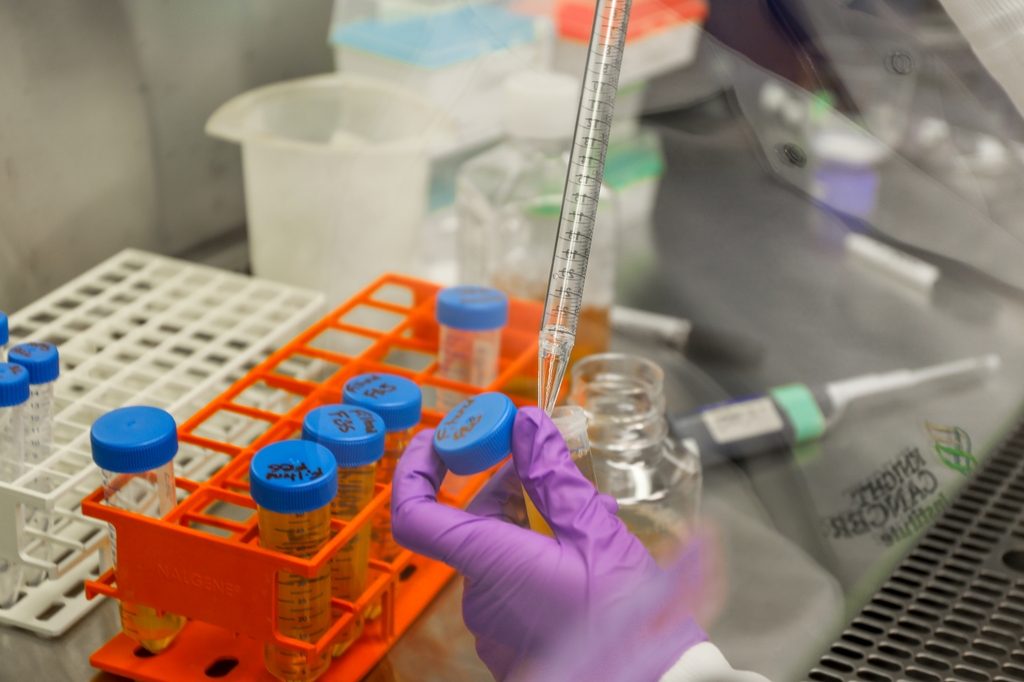
Research teams at Oregon Health & Science University will use two $1 million awards to improve detection and treatment of colorectal cancer and to develop a better approach to treat an aggressive form of brain cancer.
The Kuni Foundation awarded the grants.
“Scientists who dedicate their lives to fighting cancer need our community’s support now more than ever,” said Angela Hult, Kuni Foundation president. “These pioneering efforts have the potential to transform patient outcomes and investing in innovative projects like these accelerate breakthrough discoveries that make cancer detection and treatment more accessible and affordable.”
Improving outcomes for colorectal cancer
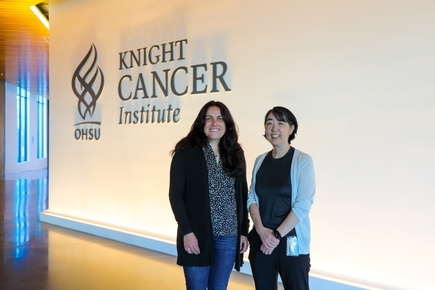
Melissa Wong, Ph.D., and Summer Gibbs, Ph.D., were awarded $1,050,000 for a project titled “Noninvasive circulating hybrid cell biomarker: Early detection and monitoring of colorectal cancer.”
Wong holds the Rood Family Endowed Professorship of Cancer Research in the departments of Cell, Developmental, and Cancer Biology, and Dermatology, and is the Associate Director of Basic Science in the OHSU Knight Cancer Institute. Gibbs holds the Douglas Strain Endowed Professorship of Biomedical Engineering and is also a member of the OHSU Knight Cancer Institute.
Colorectal cancer is the third most common cancer and the second leading cause of cancer-related deaths in the U.S. and around the world, causing about 1 million deaths each year globally. Most cases happen in people who have not been screened, did not receive follow-up care or had their cancer missed during testing.
The gold-standard screening tool currently available is a colonoscopy, but not all people get them. This is often because of issues like high cost, limited access and discomfort with the procedure. In addition, colonoscopy screening is recommended starting at age 45, but, according to the American Cancer Society, rates of young people diagnosed with aggressive colorectal cancer are rising.
Blood tests are a promising alternative. Wong and Gibbs’ project will develop a non-invasive blood test that can catch colorectal cancer earlier and distinguish the difference between pre-cancer and cancer.
“To tackle this challenge, we assembled a multi-disciplinary team that includes cancer biologists, chemists, computational biologists and clinicians to synergize our expertise in cutting-edge multiplexed protein analyses with novel cancer biology,” Wong said.
Gibbs added: “Support from the Kuni Foundation for our studies comes at a critical time when federal funding is unstable, allowing us to move our science forward for ultimate impact on patient care and survival.”
A new approach for glioblastoma
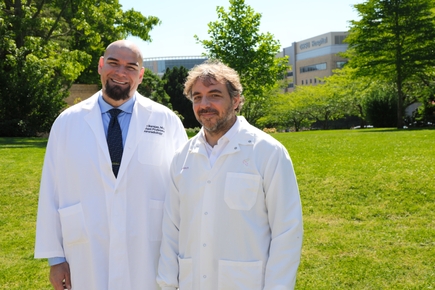
Ramon Barajas, Jr., M.D., and Domenico Tupone, Ph.D., were awarded $1,050,000 for their project, “Leveraging hibernation to advance a cure for Glioblastoma.” Barajas is associate professor of diagnostic radiology in the OHSU School of Medicine. Tupone is research assistant professor of neurological surgery in the OHSU School of Medicine.
Barajas and Tupone’s project builds off their 2023 Kuni Imagination Award project, exploring a new approach to treating an aggressive brain cancer called glioblastoma. They used a hibernation state (called torpor-like state, or TLS) and looked at how the body’s immune system can help fight the disease.
The immune system plays a big role in how glioblastoma grows. Around 40% of the tumor is made up of immune cells called tumor-associated macrophages and microglia. These cells can either attack the tumor or help it grow. They can also make treatments like chemotherapy and radiation less effective.
The new research project aims to fix that by finding better ways to guide the immune system to fight glioblastoma.
“The collaboration with Dr. Barajas, combining my work on hibernation induction with his expertise in cancer research, underscores the urgent need to expand our basic research into safe and controllable methods for therapeutic hibernation in humans,” Tupone said. “Receiving the prestigious Kuni Award confirms that we are on the right path, pushing the boundaries of innovation in the development of new methodologies for cancer therapy.”
Barajas added: “This approach could offer new insights into how the body interacts with these tumors and potentially open a new therapeutic avenue based on modulating metabolism and immunity. This is exciting because patient outcomes over the last 20 years have remained largely unchanged. We hope the knowledge gained from this research can be translated soon to make a real difference in the lives of patients fighting this deadly disease.”
About the Kuni Foundation: The Kuni Foundation advances the power of human potential. Based in Vancouver, Washington, the foundation supports scientists revolutionizing cancer research and advances inclusive opportunities for people with intellectual and developmental disabilities. Since 2017, the foundation has awarded more than $80 million to organizations throughout Oregon and Washington in service to its mission. Learn more about the Kuni Foundation.