New OHSU program honors rich American Indian and Alaska Native heritage

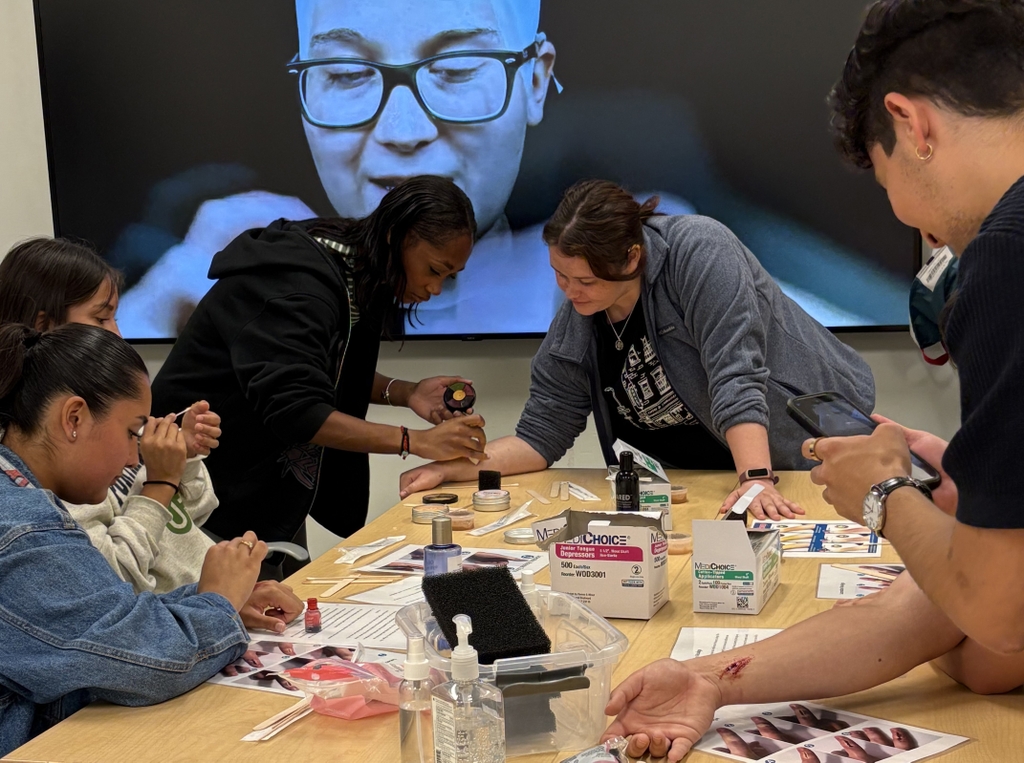
For college students in the new Tilikum Summer Health Experience program, the message from Shandee Dixon, M.S., Ph.D., (Apache) is clear: “Once you are part of this program, you become part of the NNACoE community — you have a place at Oregon Health & Science University.”

Dixon, assistant professor in the OHSU-PSU School of Public Health and director of didactic learning with the Northwest Native American Center of Excellence, or NNACoE, serves as faculty lead of the five-week summer enrichment program designed for American Indian and Alaska Native, or AI/AN, first- and second-year college students who are interested in pursuing careers in health professions.
The new program, launched this year, fosters tight-knit connections and a support system that provides a sense of belonging. The inaugural cohort of 15 students from tribal nations across the country completed the Tilikum program in August.
Broadening access to health professions
The Tilikum program is hosted at Portland State University in collaboration with OHSU’s NNACoE and the Association of American Medical Colleges, or AAMC. This first-of-its-kind collaboration is part of the AAMC’s Minority Serving Institutions Pathway Initiative, launched in 2024 as part of the Summer Health Professions Education Program, which has provided health professions enrichment for more than 30,000 college students since 1989. Of the participants in both the medical and dental tracks, more than 65% apply to medical school and nearly 70% apply to dental school.
The application for the 2026 Tilikum Summer Health Experience opens on Nov. 1. Support the next generation of Indigenous health leaders by learning more, sharing recruitment details, and supporting Tilikum students.
Questions? Contact NNACoE.
The programs share a commitment to broadening access to health professions for students from all backgrounds and ensuring more voices and perspectives are represented in health care. By prioritizing applicants who are citizens or descendants of federally recognized AI/AN tribes, this program directly addresses the critical need to increase the numbers of health care professionals who are most likely to serve rural, tribal and communities with the greatest needs, Dixon said.
Tilikum is a hybrid experience that begins with three weeks of virtual programming, followed by two weeks of in-person activities at PSU and OHSU. This immersive program combines academic enhancement, professional development, clinical shadowing and cultural engagement to prepare students for future careers in health care — all while staying connected to their Indigenous heritage.
Although Tilikum is part of the larger Minority Serving Institutions Pathway Initiative, Dixon notes that the curriculum is tailored for tribal students. By prioritizing Indigenous values and knowledge, and incorporating tribal components, the new curriculum looks different from other initiative sites.
Decade of advocacy
Erik Brodt, M.D., (Ojibwe) professor of family medicine and associate dean for Native American Health in the OHSU School of Medicine, and founding director of NNACoE, has been promoting and supporting the expansion of the Summer Health Professions Education Program to a tribal site for nearly a decade.
Tilikum is the outcome of his advocacy.

From Tilikum’s inception, collaboration and partnerships have been at the forefront. Under Brodt’s leadership, partners came together to pool resources and expertise to maximize positive outcomes for students in AI/AN communities. The team worked expeditiously to build the entire program in just a few months.
“Students couldn’t believe that this was the first year of the program,” said Alethea Barlowe, (Klamath Tribes) Tilikum program manager. “It was so rewarding to see all of the partners’ dedicated work recognized by the people we were looking to serve.”
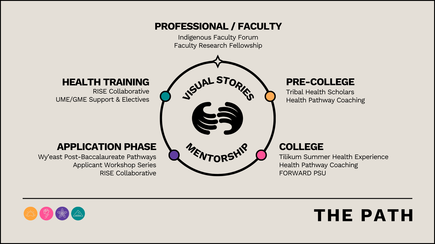
In the strategic plans of both NNACoE and OHSU, Tilikum occupies a pivotal space in “The Path” to medicine. Tilikum program outcomes align with OHSU’s mission to advance health equity and support underrepresented students in medicine and health professions. Meanwhile, NNACoE offers a continuum of health professions initiatives for AI/AN learners, from high school through early faculty level. Until this year it lacked any specific programming for undergraduate students, making Tilikum essential to NNACoE’s mission to recruit, train and retain future AI/AN health care leaders.
“This program is going to have a massive impact,” Barlowe said. “The Tilikum Health Experience is a bridge for students to go from high school into medicine — filling the gap NNACoE was missing.”
Lifelong network of support
Along with building collaborations across institutions, the experience also built close-knit friendships among the first cohort — what organizers hope will be a lifelong network of support for the students.
The students traveled to Portland from around the country to complete the last two weeks of the program in-person at PSU and OHSU. For their final project, students designed culturally responsive health care models for their communities. The posters were filled with innovative ideas, artwork, creativity, emotion and excitement, Dixon said.
“We wanted them to voice their dreams,” she said. “Their final projects showed what they envisioned for the future of health care — accessibility, no barriers and what matters to their communities. Empowerment is the foundation of their journey.”