
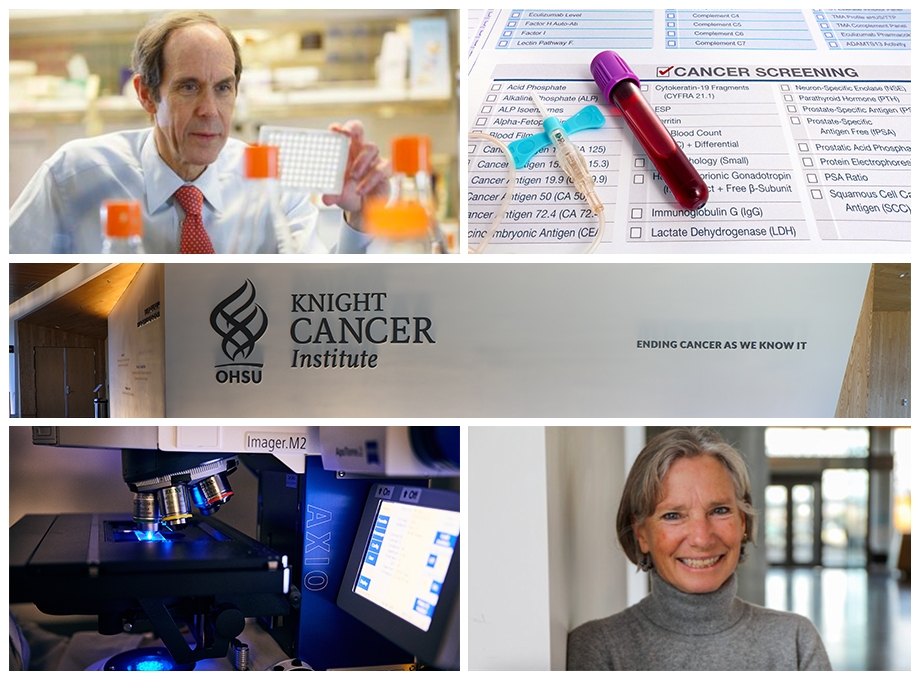
A new statewide plan released this week, the 2025 Comprehensive Cancer Control Plan, offers an updated, data-driven look at the cancer landscape in Oregon, including where the disease hits the hardest and where the biggest gaps in care and prevention exist.
Led by Oregon Health & Science University’s Knight Cancer Institute and the Oregon Health Authority, or OHA, the guide identifies five priority cancer areas of focus: liver, breast, colorectal and lung cancers, and the importance of increasing the vaccination rate for human papillomavirus, or HPV. It is designed to provide information and guidance for scientists, health care providers, policymakers and community advocates.
“The real power in this plan is that it doesn’t just point out the challenges — it highlights where progress is possible,” said OHA director Sejal Hathi, M.D., M.B.A. “By understanding which cancers are rising, which communities are most affected, and where prevention efforts are falling short, we can target our work in smarter ways. This is how we build a healthier future, one where fewer Oregonians have to face the weight of a late-stage cancer diagnosis.”
The 2025 plan marks the first time OHSU has participated in its creation.

“I am so pleased that the Knight Cancer Institute was able to co-lead the development of this plan, which gives us a clearer picture of the cancers that demand the most urgent attention,” said Brian Druker, M.D., CEO of the OHSU Knight Cancer Institute. “This plan helps guide our research to implementation priorities — from early detection to new therapies — in a meaningful way. When science and community needs move in the same direction, we can make remarkable strides in reducing cancer’s toll.”
2025 Comprehensive Cancer Control Plan: Five Priority Areas
Liver Cancer: Oregon’s liver cancer incidence rates have nearly tripled in the last 30 years and are consistently higher than the U.S. national rate. In 1999, Oregon was ranked 49th in the nation for liver cancer mortality, but by 2021, Oregon had the 13th highest liver cancer mortality rate in the U.S. Males in Oregon consistently have higher liver cancer rates, accounting for about 70% of new diagnoses, and all communities of color are disproportionately impacted. The biggest risk factors for liver cancer are chronic hepatitis B or C infections, and excessive alcohol use. The plan calls for better prevention, screening and treatment options.
Breast Cancer: Despite an overall decrease in breast cancer incidence rates in Oregon over the past 25 years, rates in women under 40 are rising. Younger women are more likely to be diagnosed with the more aggressive triple-negative breast cancer and for it to be metastatic, which means it is late-stage and has spread. Breast cancer remains one of the most common cancers in Oregon. Four of the top five Oregon counties experiencing the highest incidence rates are rural or frontier: Hood River, Lake, Wheeler and Wallowa counties. The plan emphasizes early detection through on-time and regular screenings.
Colorectal Cancer: While colorectal cancer incidence rates have steadily dropped in the last two decades, rates are increasing among Oregonians under 50 — nearly doubling from 1998 to 2022. Like liver cancer, males and rural Oregonians have the highest incidence rates of colorectal cancer. The plan promotes an increase in screening rates beginning at age 45, especially for communities that are disproportionately affected.
Lung Cancer: Mirroring national trends, Oregon’s lung cancer incidence rates have been declining over the past 25 years, and yet it is still the deadliest cancer in the state. In 2022 alone, 1,715 Oregon residents died from lung cancer. American Indian and Alaska Native populations are disproportionately affected, with a diagnosis rate 14% higher than the average for all races between 2018 and 2022. About 80% of lung cancer cases are linked to commercial tobacco use, and 14% are linked to radon. The plan supports tobacco prevention programs, encourages lung cancer screening for those at risk, and calls for an increase in radon awareness and testing.
HPV Vaccination: Human papillomavirus, or HPV, can lead to six types of cancer, including cervical cancer. Approved by the Federal Drug Administration in 2006, the HPV vaccine is most effective when administered to youth ages 9 to 12. In 2023, Oregon’s HPV vaccination rates for 13- to 17-year-olds was just 59% in urban areas and 52.7% in rural areas. The plan recognizes that HPV vaccination rates have plateaued in Oregon and emphasizes increasing them as a top priority, especially among boys and youth living in rural areas of Oregon.
The Centers for Disease Control and Prevention funded development of the plan, which was last produced in 2005 and expired in 2010. Much has changed locally and nationally since then.
Over the last 20 years, cancer care has shifted from a one-size-fits-all approach to more precise, personalized treatment driven by advances in genomics and molecular testing. New therapies — such as targeted drugs and immunotherapy — have improved survival rates. Earlier detection, better imaging and more coordinated, multidisciplinary care have turned many cancers into chronic or manageable diseases.
Despite this, cancer remains the leading cause of death in Oregon, with about 22,000 new diagnoses annually, underscoring the importance of a plan that can better assist Oregonians in preventing cancer, improving early detection, supporting survivors and addressing health disparities.
Cancer doesn’t affect everyone equally. People in rural areas, communities of color, and those with lower incomes often face higher cancer rates and worse outcomes. Equity consultants were an integral part of the creation of the report, along with input from health and cancer experts, and a cross-sector steering committee.
Next step: Task forces
This year OHA and the Oregon Cancer Coalition will begin creating task forces that will focus on specific cancers and issues, create strategies and track progress, with a goal of positive change through collaboration across regions and communities.
The OHA’s newsletter, Oregon Health News, delivers weekly information to Oregonians and will include updates on the Cancer Control Plan task force meetings. Download the full plan and learn more about how to get involved by emailing the Oregon Cancer Coalition at OregonCancerPlan@oha.oregon.gov.
“This plan points out the disparities that exist in our state — the racial or ethnic groups that have the highest cancer mortality rates or the highest late-stage cancer diagnosis rates or the lowest screening rates,” said Lizzie Moore, M.P.H., manager of the Comprehensive Cancer Control Program at OHA. “This allows us to see, on a population health level, who is facing the worst impact of cancer right now. We want to help facilitate as these communities develop solutions. Each community is different and will develop actions, ideas and plans that are meaningful to them.”
The Cancer Control Plan is designed to be flexible and responsive. As new data becomes available and community needs evolve, the plan can be updated to stay relevant and effective.

Jackie Shannon, Ph.D., associate director of community outreach and engagement at the OHSU Knight Cancer Institute and professor in the Division of Oncological Sciences (population science) in the OHSU School of Medicine, said the plan puts a spotlight on areas of cancer care and prevention efforts that need the most attention.
“For example, incidence rates for breast, colorectal and lung cancers in Oregon have all been declining, yet when we break apart the data, we can see where we really need to focus effort on some concerning trends,” she said. “Incidence of breast and colorectal cancers are increasing in younger individuals, and lung cancer mortality is substantially higher in particular populations, such as with Pacific Islanders.”
These are opportunities, Shannon said, for individuals, community groups, local coalitions, businesses, health systems and elected officials to discuss solutions and tactics that can shape a healthier future for all Oregonians.
At OHSU, for example, the cancer priorities identified in the plan have been adopted by the Knight Cancer Institute to drive its scientific strategic planning.
“We are focusing our substantial scientific strengths toward addressing the greatest cancer needs in Oregon,” Shannon said.
Moore called the plan a starting place, and said it is meant to be a springboard for action.
“There’s so much to do,” Moore said. “The work of the Oregon Cancer Coalition is to try to convene and connect people. It will be powerful for there to be systems-level change, but it’s just as powerful, on a micro level, for community members — perhaps in a rural area that has high rates of liver cancer — to increase awareness about conditions most often associated with that specific cancer and how to address them. Or, for instance, physicians in areas with high lung cancer rates could be champions for tobacco and lung cancer screening at their clinics and in their communities.
“We need as many people as possible involved at all levels to lower cancer rates in Oregon,” she said. “If we work together, there is no question that we can make a difference.”
Knight Cancer Institute project staff were supported by the Knight Cancer Institute’s National Cancer Institute cancer center support grant. Research reported in this cancer burden report was supported by the National Cancer Institute of the National Institutes of Health under award number P30CA069533. The content is solely the responsibility of the authors and does not represent the official views of the National Institutes of Health.
Oregon Health Authority staff were supported by the CDC’s Cancer Prevention and Control Programs for State, Territorial and Tribal Organizations grant. The Centers for Disease Control and Prevention supported the printing and distribution of the monograph under cooperative agreement NU58DP007105 awarded to Oregon Health Authority. Its contents are solely the responsibility of the authors and do not necessarily represent the official views of CDC.