
It all began with a phone call.
Pediatricians in American Samoa were faced with a severely sick child and unsure how to treat them. They reached out to several West Coast hospitals to ask for help.
The child had rheumatic heart disease, or RHD, a condition where the heart valves have been permanently damaged by a fever that occurs with an untreated strep throat infection. The child’s case had progressed to endocarditis — a life-threatening inflammation of the lining inside the heart's chambers and valves.
The Pediatric Heart Care team at Oregon Health & Science University’s Doernbecher Children’s Hospital took the call and the patient, and ultimately performed surgery at Doernbecher. Now, that patient is a healthy adult.

Jennifer Huang, M.D., associate professor of pediatrics (division of cardiology) in the OHSU School of Medicine, said that case was eye-opening for OHSU providers.
“Rheumatic heart disease is rarely something we see or treat here in the United States,” she said. “It’s largely been eradicated.
“We felt motivated to learn more about the scope of this problem in American Samoa how we could support the health of kids in their community,” she said. “The first trip took place in November 2011, and we’ve been coming back every year, and sometimes two or three times a year, ever since.”
OHSU is entering its 15th year of partnership, expanding and deepening OHSU pediatric cardiologists’ service in the territory.
“The OHSU doctors became household names to these families and to our medical community,” said Ipuniuesea Eliapo-Unutoa, director of the rheumatic heart disease program at the American Samoa Department of Health. “It’s something people look forward to every year.”
‘Not one cardiologist’
Initially, the most significant challenge was a lack of knowledge around the prevalence of RHD in American Samoa, which is the United States’ southernmost territory, located in Polynesia region of the South Pacific about 2,200 miles of Hawaii.
Local medical providers noted they were seeing a high volume of children with the condition, and while they were handling their care as best they could, there simply wasn’t sufficient knowledge, skills or resources available on the island to effectively manage the community’s needs.
The OHSU team partnered with public health professionals to conduct a prevalence study, which aimed to measure the total number of individuals living in American Samoa who have the disease.
The results were alarming: The study revealed that American Samoa had one of the highest rates of RHD in the world. Huang says that’s in part due to inherent racial and ethnic risk factors, but also due to limited resources to screen and treat the condition.
“There is a significant gap in specialty care in American Samoa, especially in the field of cardiology,” Huang said. “There’s not one cardiologist on the island.”
Long-term partnership
Efforts started small at first: OHSU providers partnered with local community health workers to make phone calls to families and arrange appointments during their weeklong visits. Over the years their efforts grew, eventually evolving into a dedicated cardiac health program housed within the American Samoa Department of Health.
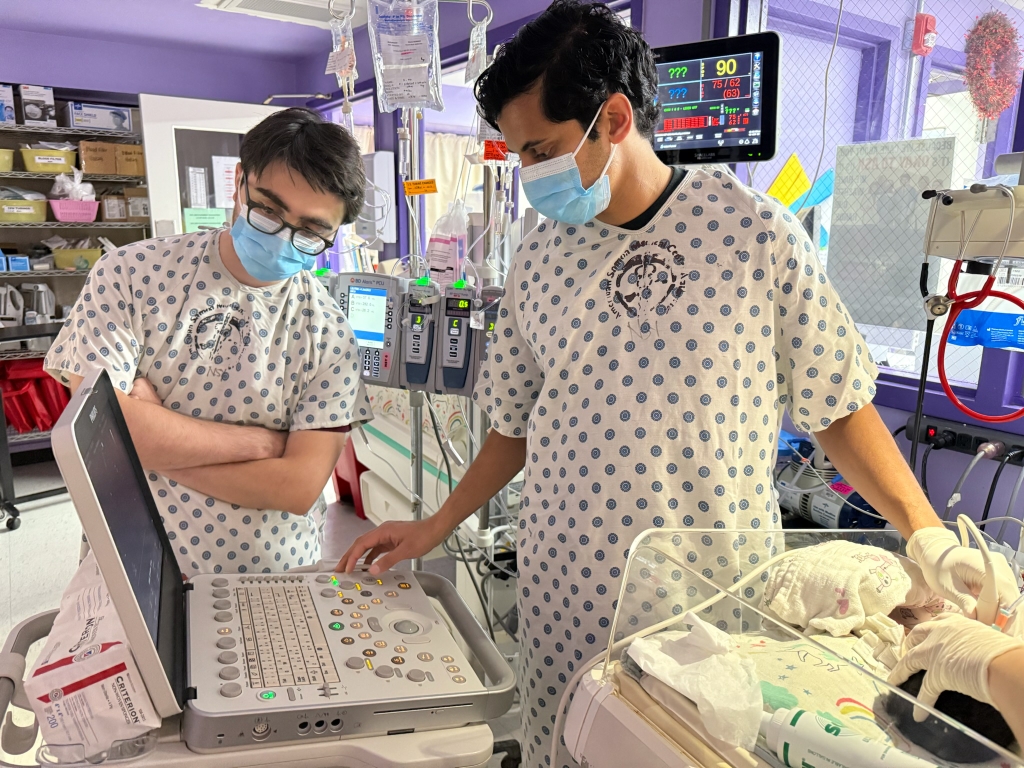
Now, nearly 15 years later, the program each year provides hundreds of out-patient clinical visits, in-patient procedures and telemedicine appointments. It also provides comprehensive training to local health professionals to be able to perform an echocardiogram, or ECHO, which is an essential tool to evaluate the heart’s function and monitor disease progression.
“Every year we build on the work we’ve done together, with research, education and treatment, and continue to see positive change in our kids,” Eliapo-Unutoa said. “It’s been such a successful partnership.”
Eliapo-Unutoa says education and community outreach are now a key component of the program. They continuously develop and distribute educational materials aimed at bringing children to clinics for strep testing earlier, before their illness develops into RHD. They also work directly with families and community members to promote general heart health practices, including counseling on nutrition, exercise, and environmental risk factors like smoking.
Next generation of cardiac care providers
In addition to its impact on children’s health in American Samoa, the partnership also offers unique and valuable education and training opportunities.
Typically, the OHSU team traveling to American Samoa includes several cardiology faculty members, sonographers, fellows, medical students and residents. For medical students, residents and fellows at OHSU, it’s an opportunity to practice medicine in under-resourced areas — a significantly different experience than practicing medicine at an academic research hospital in a major metropolitan area.
“The team made participating in this opportunity seamless. They supported me and ensured it would work with my busy clinical schedule,” said Austin Menezes, M.D., a pediatric cardiology fellow who traveled to American Samoa with the team last year.
“We saw hundreds of patients that week, so it was great to have that experience as a trainee and be able to see conditions we don’t often treat here,” he said. “I also was able to bounce between roles — doing exams, counseling, and collaborating on care plans — which was very valuable.”
Looking ahead, OHSU’s Pediatric Heart Care team hopes to continue to grow the partnership, including expanding training efforts.
“Building these relationships has been incredibly rewarding for us, and we look forward to continuing our work together for years to come,” Huang said.