

For three decades, Susan Posner’s transplanted kidney worked steadily and efficiently.
Donated by her brother in a transplant procedure at Oregon Health & Science University in 1991, the kidney worked beautifully for three decades — way beyond the norm for a transplanted kidney — until its function began to wane over the past year or two. By July of last year, Posner learned she would need a second kidney transplant.
Her husband, Oren Posner, stepped forward as a potential donor, but was rejected due to his blood type.
Fortunately for her, her nephew stepped up — just as his father did before him.
On Feb. 18, in a remarkable multigenerational act of family devotion, Ian Hawker’s 40-year-old son David Hawker became the second member of his family to successfully donate a kidney to his Aunt Susan at OHSU Hospital.
Her surgeon is gratified by the family’s faith in OHSU across the years.

“The fact that somebody would come back to us so many years later is really amazing,” said David Woodland, M.D., assistant professor of surgery (abdominal organ transplantation) in the OHSU School of Medicine. “If anyone needs a repeat kidney transplant 34 years later, we’re happy to have you back.”
Susan, who lives in Eugene, is recovering well and getting ready to get back to work as president of the landscape supply and trucking company she runs with her husband.
“When I think of the magnitude of what’s happened, it makes me feel so deeply grateful,” she said. “I’m very lucky.”
First kidney ‘pinked up nicely’
At 31 years old, Susan had recently emigrated from Scotland to Canada, then moved to Oregon. That’s when she began feeling ill.
Susan learned later that she had a condition known as glomerulonephritis, which results in inflammation and scarring of tiny structures that filter blood in the kidney. In November 1987, as it happens the very day she married Oren, the phone rang in their new home in Eugene, his hometown.
“He got a call from his family doctor saying, ‘Oren, you’ve got a very sick girl,’” she said.
Although the condition can be managed by diet or medications to calm the immune system, severe cases can result in kidney failure. Doctors told Susan she had a severe case and would need dialysis or a kidney transplant within the next two or three years. “That shocked us completely,” she said.
She was prepared to move back to Scotland to take the burden off her husband. When she told her family, her younger brother Ian told her to stay put. He was coming to her.
“At the time, Susan was under the impression that I couldn’t donate because I’d lost a spleen in a motorcycle accident,” Ian recounted. “I spoke to my GP the next day and asked if I could donate a kidney, and he didn’t see any reason why I couldn’t. I was able to get a workup and compatibility tests in Scotland and sent the details to OHSU.”
It was a match.
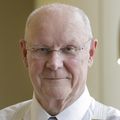
On Aug. 6, 1991, OHSU’s legendary transplant surgeon John Barry, M.D., successfully completed the procedure. Barry is still part of OHSU’s faculty after conducting thousands of transplants since he arrived in 1969, at what was then known as the University of Oregon Medical School.
In his notes at the time, Barry reported Ian’s kidney “pinked up nicely” and the procedure went well with no complications.
In fact, it went extraordinarily well.
Ian left the hospital with a sizable scar, and his sister left with a kidney that continued to function optimally for decades to come, removing waste and maintaining a healthy balance of minerals in her body.
“If you can get 20 years, that’s really amazing,” said OHSU transplant surgeon Oren Shaked, M.D. “Thirty years is out of this world.”

OHSU living donor program director Chris Connelly, M.D., added, “I tell people if they get 10 to 15 years out of it, they’re doing pretty well.”
Yet, Susan knew it wouldn’t last forever.
‘Brand-new lease on life’
David was 7 years old when he watched his dad depart from the Glasgow airport, now 34 years ago, to help his Aunt Susan.
“I also remember him coming home and seeing the scar. It was huge,” said David, now living with his wife and two young sons in Woodburn, Oregon. “We were told there may come a time when she might need another one.”
That time arrived last year.
In July, after it became clear that she would need a new kidney, Susan had five nieces and nephews in Scotland who all quickly offered to donate their kidneys. By that time, her brother and his son had moved to Oregon years before and worked for Susan’s and Oren’s business, Lane Forest Products.
Ian, a robust 65-year-old who played professional soccer in Scotland, has come to understand the value of living donations not just for his sister, but more generally knowing the risk is low and the payoff is profound. He’s proud of his son.
“You’re giving a person a brand-new lease on life,” he said. “David stepped up to the mark.”
For his part, David didn’t think twice.
“When I was first asked by my dad, there were no second thoughts. I said, ‘Of course,’” he said.
On the day of the procedure last month, David joked with the OHSU surgical team and with his father that he would have been pleased to get an incision at least as large as the one he remembered for his dad. “I’m kind of competitive,” he said.
Minimally invasive surgery
Alas, he benefited from the most advanced form of robotic surgical technology.

On Feb. 18, Shaked led a surgical team that accessed David’s kidney through a robot-assisted laproscopy, a state-of-the-art procedure that OHSU began offering a year ago. Although the surgery involving both the donor and recipient requires a large, intricately choreographed team, the incision in David’s lower abdomen is surprisingly small.
“Four or five inches if you’re lucky,” David quipped.
As it turned out, across two generations and three decades, the Posner and Hawker families experienced firsthand the evolution of minimally invasive surgery.
“You don’t have to cut through really almost anything,” Shaked said. “You just have to separate structures. It’s certainly less traumatic for the person receiving the surgery, and recovery can be much quicker.”
Two days later, David was back home recovering with his family in Woodburn.
Susan, 68, spent a few weeks recovering in an apartment near OHSU, with her husband providing supportive care. She’s now back in Eugene, where she will resume running their business and occasionally paying a follow-up visit to OHSU in Portland.
She’s deeply grateful for the support of friends in Eugene, as well as the outpouring of emotion, thoughts and prayers from the people in her company.
And she’s especially grateful for her family.
“For me, it was very, very simple,” Ian said. “She’s my sister, and I can live perfectly well without one kidney. That’s why God gives you two, so that you can give one away.”
“This was an emotional journey, feeling overwhelmed with the daily support and encouragement from David, who never wavered on his choice to donate his kidney. It is truly a gift of life, a great life!
“My gratitude goes to the transplant team who were so supportive during recovery, which was without exception extraordinary. My hope by telling this incredible family story is to give encouragement to anyone who is faced with this decision to become a kidney donor. It is an amazingly wonderful thing to give new life to someone — and to know with this new technology at OHSU, recovery time is much-reduced, and scarring is minimal, allowing you to become an amazing hero!”
— Susan Posner, OHSU patient and recipient of kidneys donated by her brother and nephew