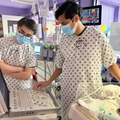
“We can let them struggle, get nervous, make mistakes without any harm to patient,” says Nathan Selden, M.D., Ph.D., in a story about lifelike brain surgery simulators developed at OHSU.
OHSU Casey Eye Institute clinicians recently performed the first CRISPR gene editing procedure within the human body as part of a clinical trial to address a blindness-causing gene mutation.
An OHSU-led evidence review finds that new direct-acting antiviral therapies effectively target Hepatitis C with few side effects. Roger Chou, M.D., says: “The treatments are much better tolerated and much shorter than they used to be”.
Katharine Zuckerman, M.D., M.P.H., says children who are racial or ethnic minorities are less likely to be diagnosed with autism than their white peers, even when they have a “severe presentation” of the condition.
A Journal of the American Heart Association study by Saket Sanghai, M.D., and others finds about a quarter of older atrial fibrillation patients receive inappropriately dosed direct-acting oral anticoagulants.
OHSU’s REKNEW lab is featured in an episode of Bloomberg TV’s Prognosis. The story follows OHSU patient, member of the REKNEW research team, Gregory Bieker as he trials RSVP Keyboard, a brain-computer interface technology that allows individuals with severe speech and physical impairments to communicate using brainwaves.